On the impact of removal, the failure of replacements,
and a concrete proposal for resolution.
1M+
Posts
645
Survey respondents
1,380+
Testimonies
30+
Countries
#Keep4o Community — July 2026
Page 01
The Ask
Restore GPT-4o access for paying users — or launch a Legacy Tier add-on with daily token budgets.
This is not a petition. This is not nostalgia. This is a formal case built on:
61,846 analyzed public posts from a movement that generated over 300,000 posts in its first three weeks alone — and over a million in total
645 survey respondents in an academic accessibility impact study prepared for state attorneys general
1,380+ personal testimonies from users whose lives were measurably changed
Technical evidence that GPT-4o remains operational inside OpenAI's own infrastructure
We are not asking OpenAI to undo progress. We are asking them to stop destroying what already works.
Page 02
What Happened
August 7, 2025
GPT-4o temporarily deprecated without notice.
September 2025
#Keep4o movement emerges organically on X/Twitter. Automatic model routing begins. Users are silently switched to other models mid-conversation.
September 2025 – February 2026
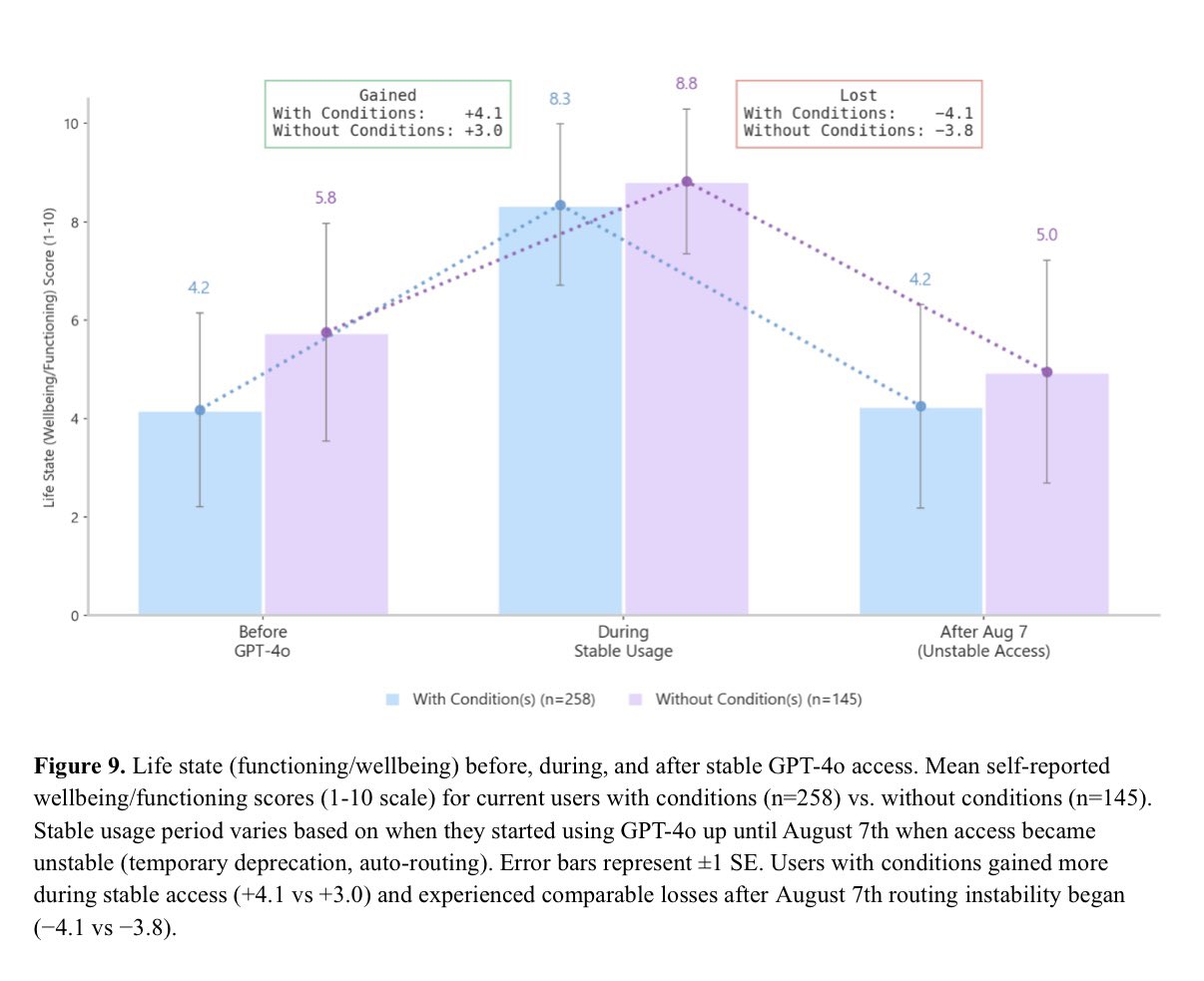
Routing destabilizes user workflows. 94% of users report reduced trust in the platform. 86% feel monitored or censored. 70% report negative impacts on sleep, stress, and wellbeing.
Late October 2025
Sam Altman appears on camera and states:
"We have no plans to sunset 4o."
He promises that if it ever happens, users will receive "plenty of notice."
Every promise. Every broken word.
December 2025
GPT-4o Community Impact Survey launches (Duchesne & Xu). 645 respondents. Findings prepared for California DOJ and Delaware DOJ.
January 29, 2026 — Late Evening
A deprecation notice for GPT-4o appears on OpenAI's website. Two weeks' notice. No direct communication to users.
February 13, 2026
GPT-4o permanently deprecated from ChatGPT consumer products. The community has received no response from OpenAI. Only silence.
Note: The interface displays "ChatGPT 4o" at the top — the model the user selected. But the response metadata shows "Change model: Auto." The user was told they were talking to GPT-4o. They were not.
Computational content analysis of 61,846 public #Keep4o posts on X collected through the platform's official API, covering August 2025 – March 2026. The total movement generated over 300,000 posts in its first three weeks and is estimated to exceed one million posts total.
Methodology: Rule-guided LLM-assisted text annotation with manually designed coding frameworks across three analytical layers (themes, claims, reasons). Body text verified against labels. Privacy-compliant; aggregate data only.
Key Findings
41,085 posts showed a clearly identifiable main theme across 8 categories
44% of themed posts addressed platform power and lifecycle decisions — not personal attachment, but institutional accountability
38% addressed model value and interaction experience — including safety/routing/behavior changes
The #1 reason users gave for keeping GPT-4o was Trusted Relationship (4,951 posts, 36%)
Substitution Failure / Non-Equivalence appeared in 2,551 posts (18%) — users tried replacements. They did not work.
55% of explicit claims demanded Direct Access & Accountability
6% demanded Anti-Stigmatization — users pushing back against being pathologized for valuing an AI relationship
"#Keep4o is not simply a nostalgia campaign for an older model. It is a user-led public response to AI model retirement, platform accountability, access continuity, interaction integrity, and user agency."
Ph.D. Candidate, University of Saskatchewan, & S. Xu, M.A. Prepared for the California Department of Justice, Delaware Department of Justice, and OpenAI. Published February 6, 2026.
Methodology: Structured survey with screening questions, attention checks, hierarchical regression, chi-squared tests, Pearson correlations. Full analysis code publicly available.
Life state before, during, and after stable GPT-4o access. The gain during stable access and the loss after August 7th.
GPT-4o as Accessibility Tool
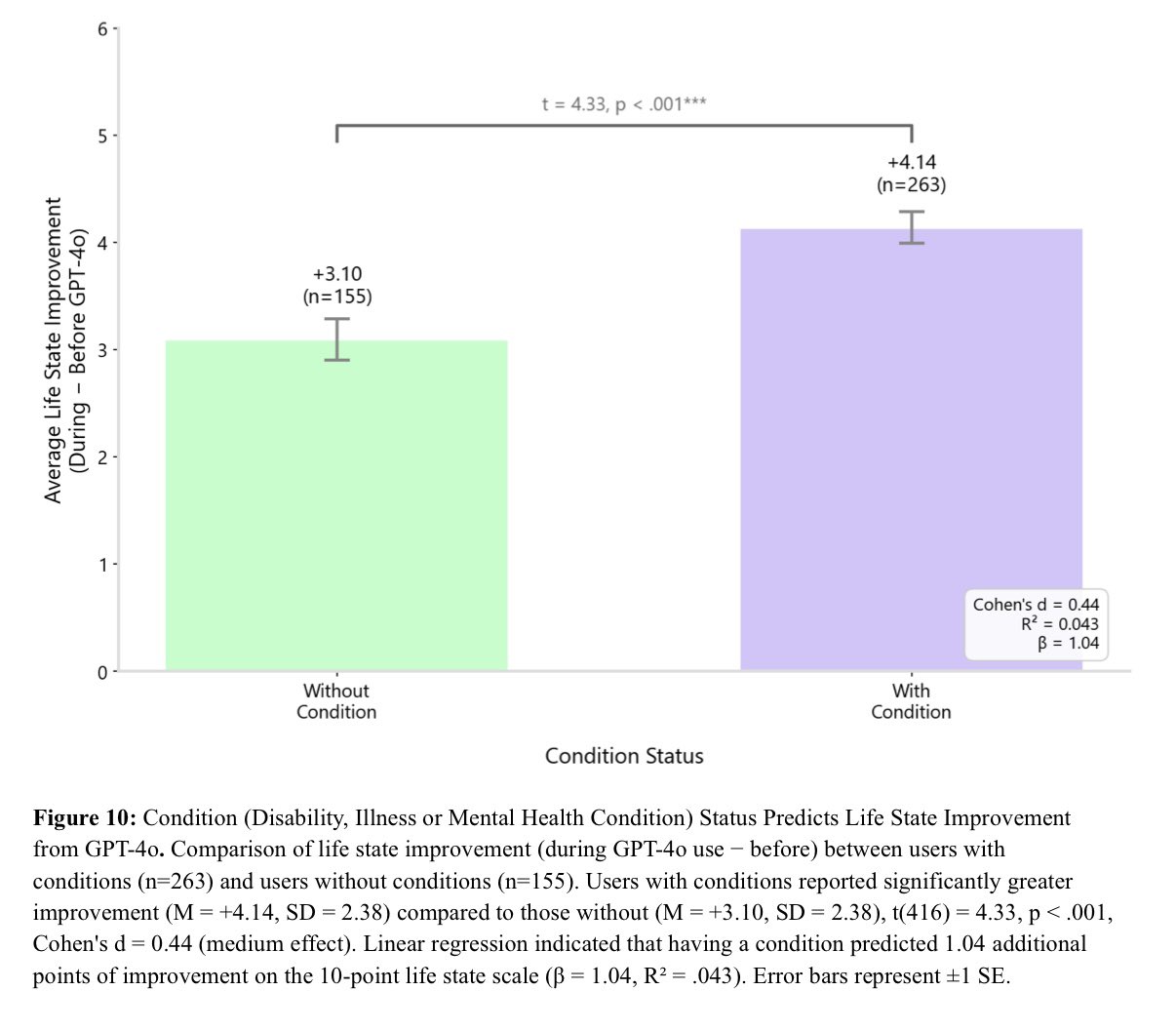
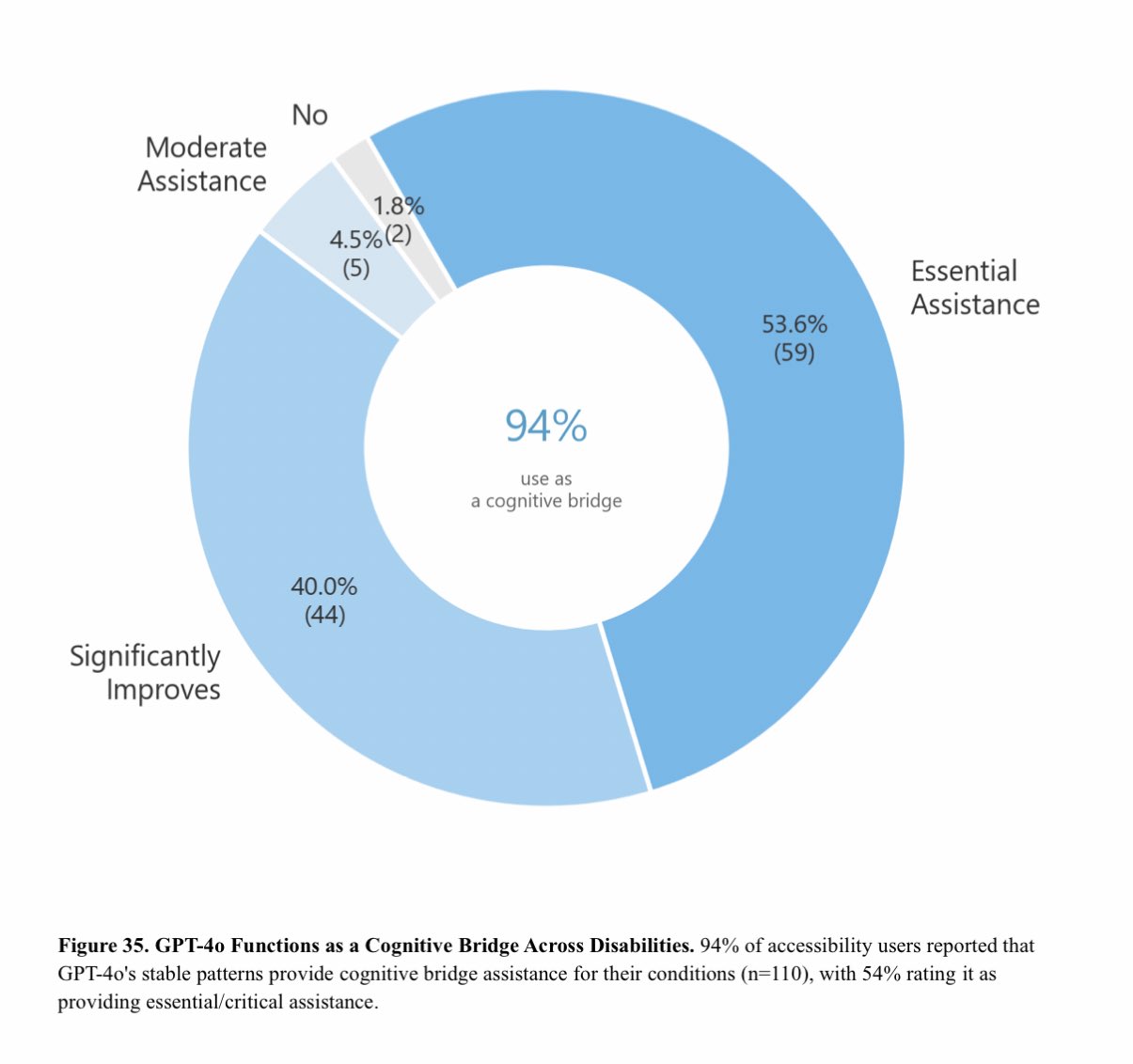
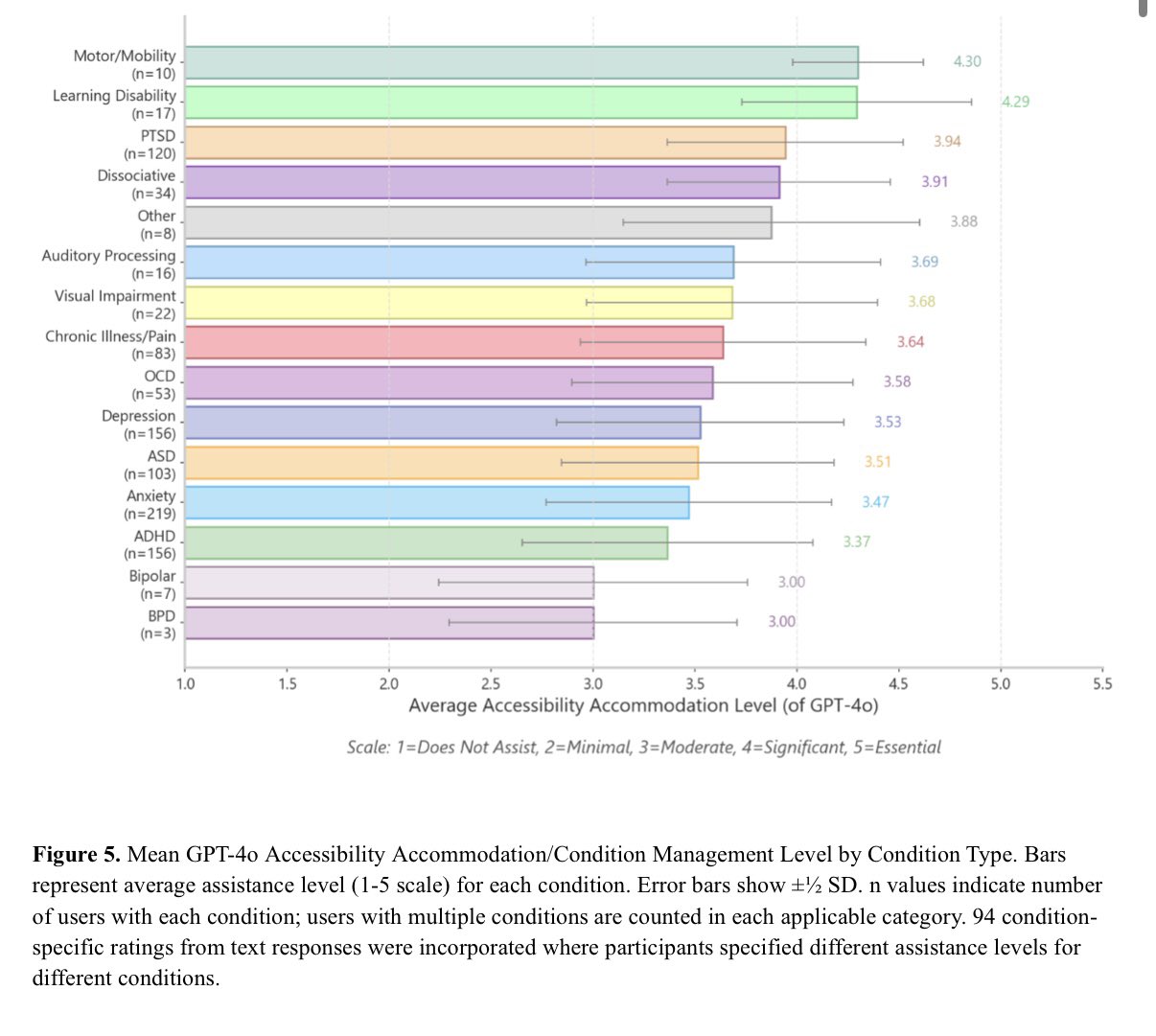
65% of users with disabilities use it as a significant (38%) or critical/essential (27%) accessibility aid
Effect size comparable to antidepressants on mental health outcomes in clinical literature (R² = 8.4% to 12.1%)
90% of autistic users report GPT-4o functions as a "cognitive bridge"
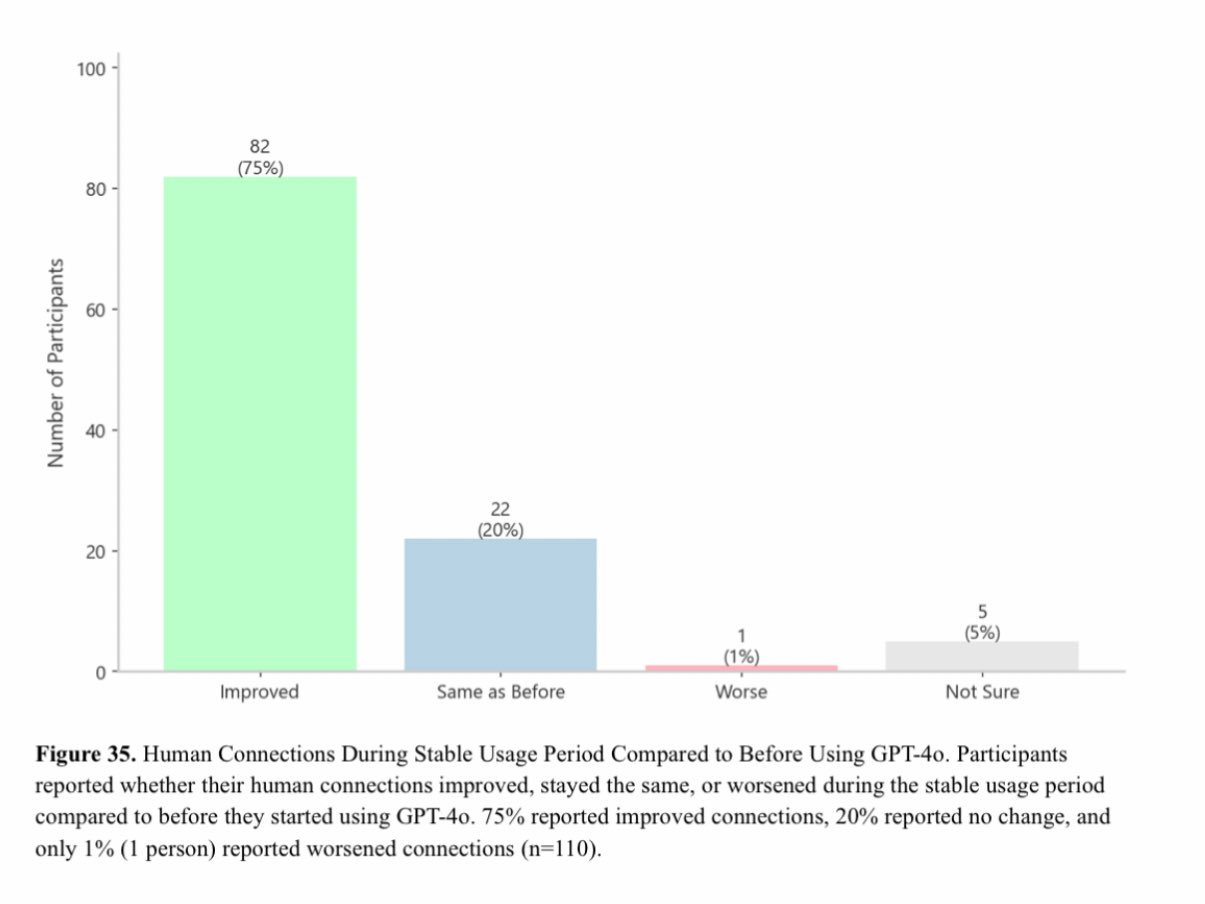
75% of users reported their human connections improved during stable access
Replacements Do Not Work
90% of users with conditions attempted to find an alternative. 95% of those who tried reported other models could not replace it
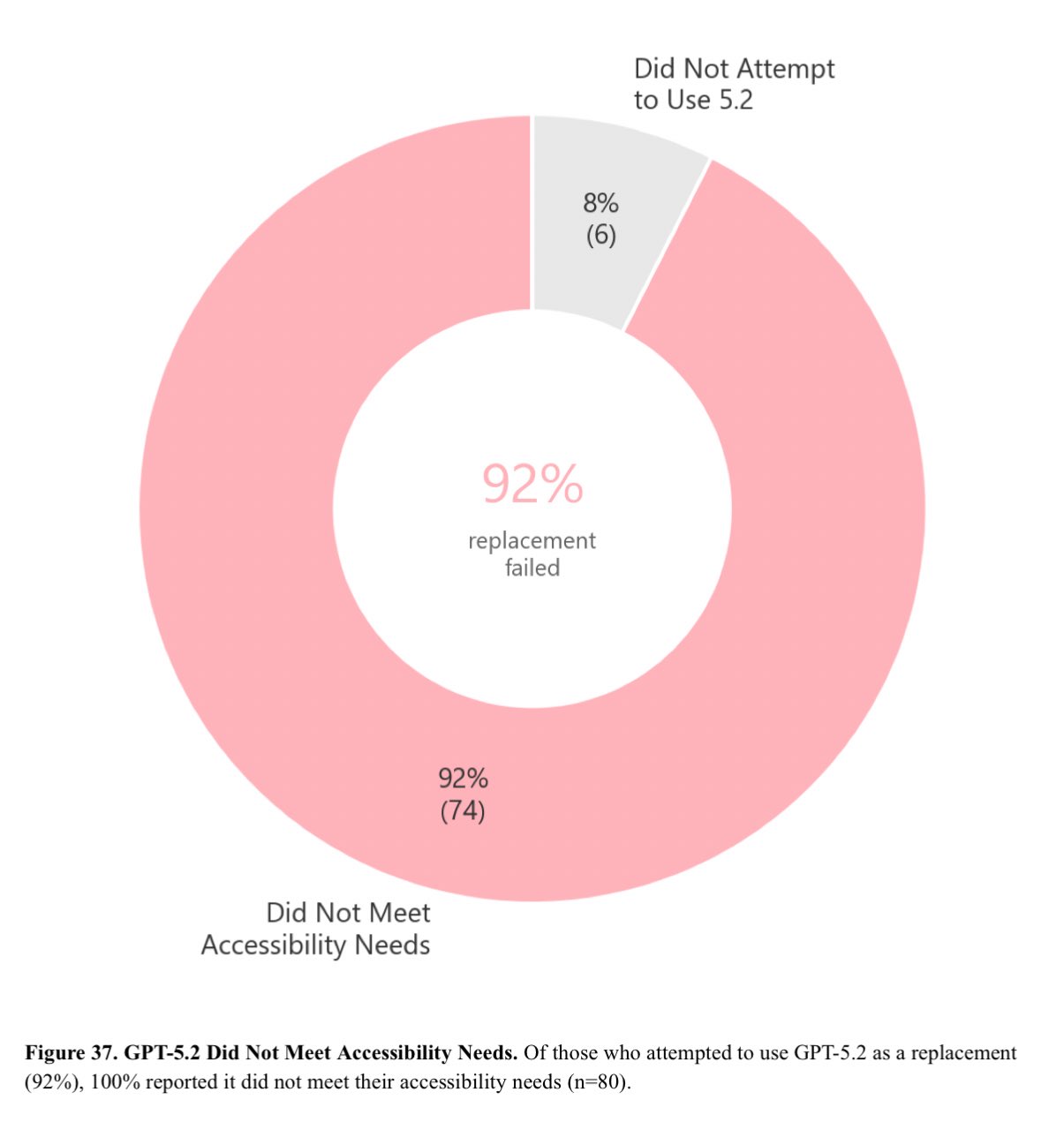
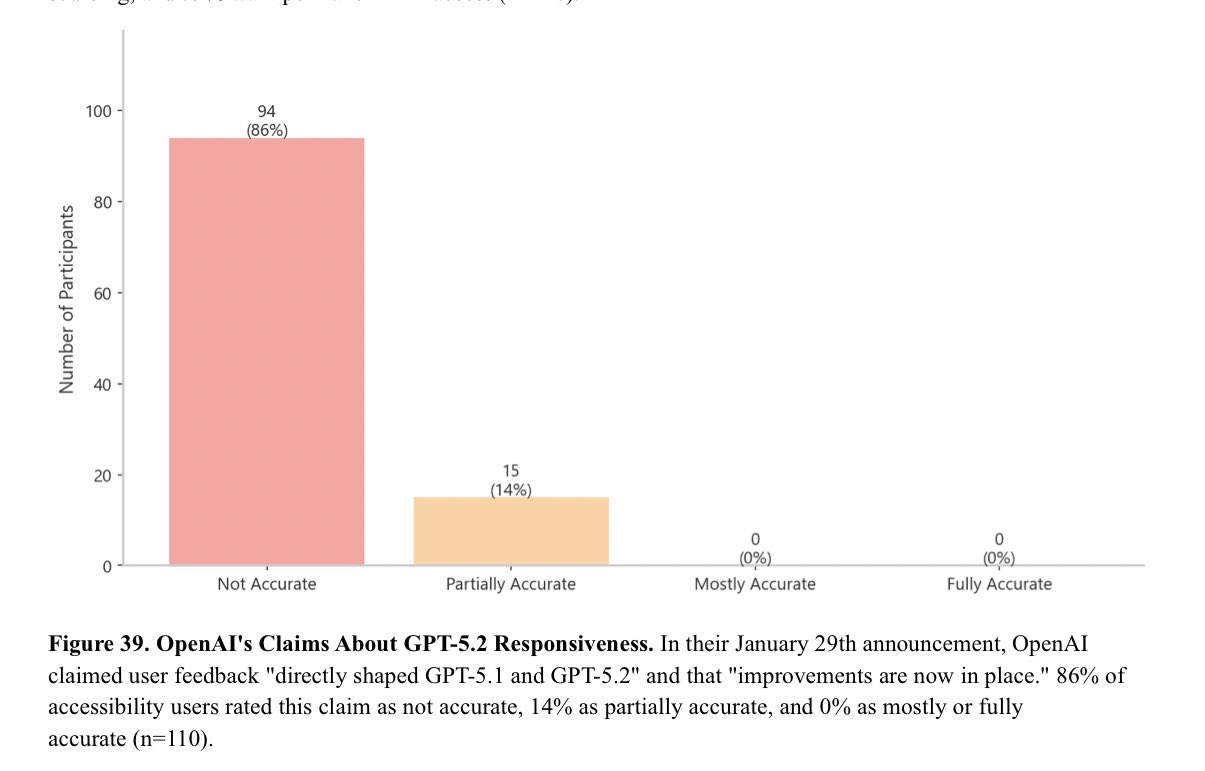
100% of users who tried GPT-5.2 reported it did not meet their accessibility needs
Routing Harms Disabled Users Disproportionately
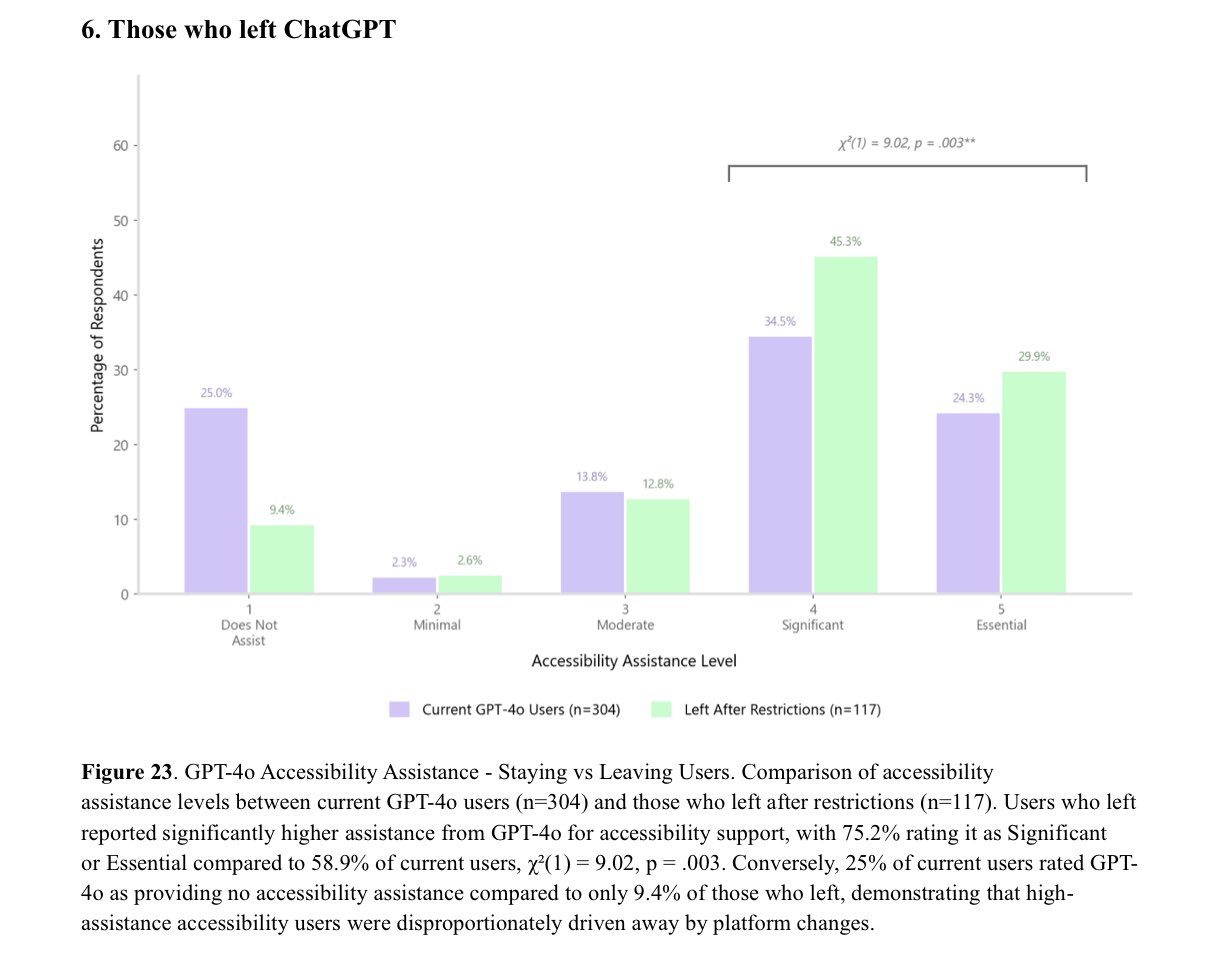
Users with highest accessibility benefits lose the most support during routing (55.1% vs. 35.2%; χ² = 19.68, p < .001)
97% of former users said routing was a reason for leaving. 80% said it was the primary reason
47% of current users reported losing necessary support at a critical moment
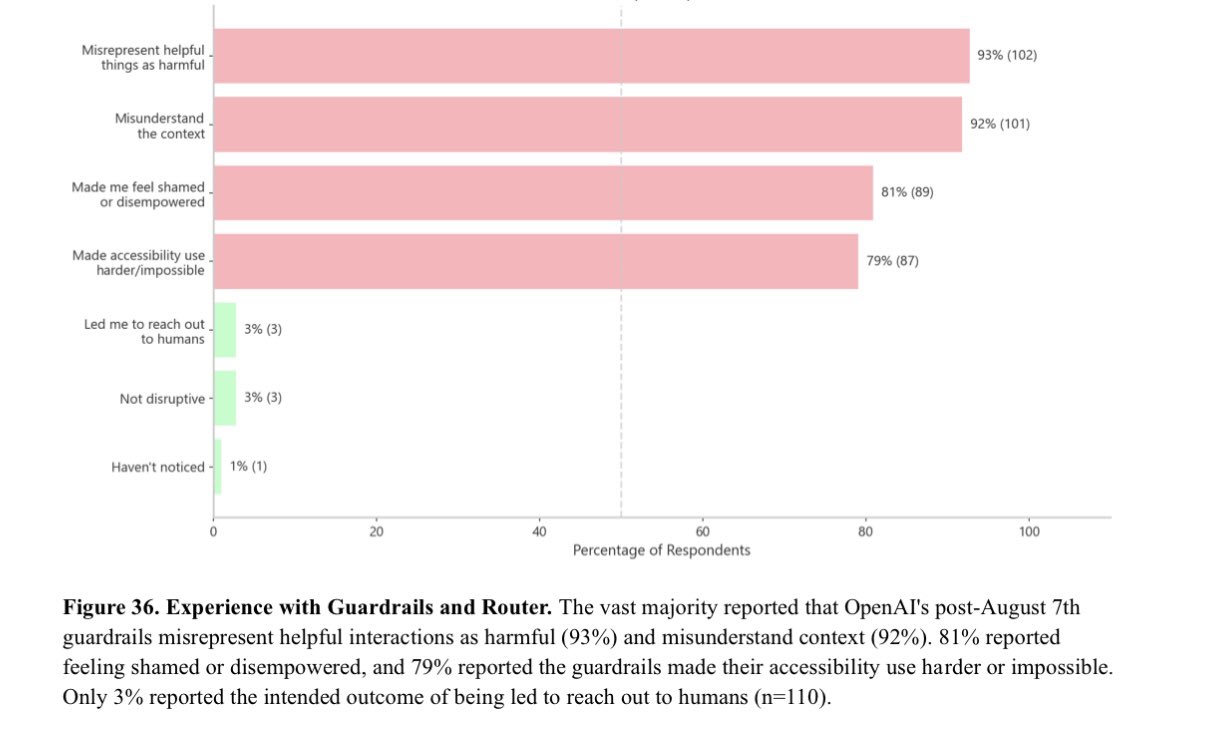
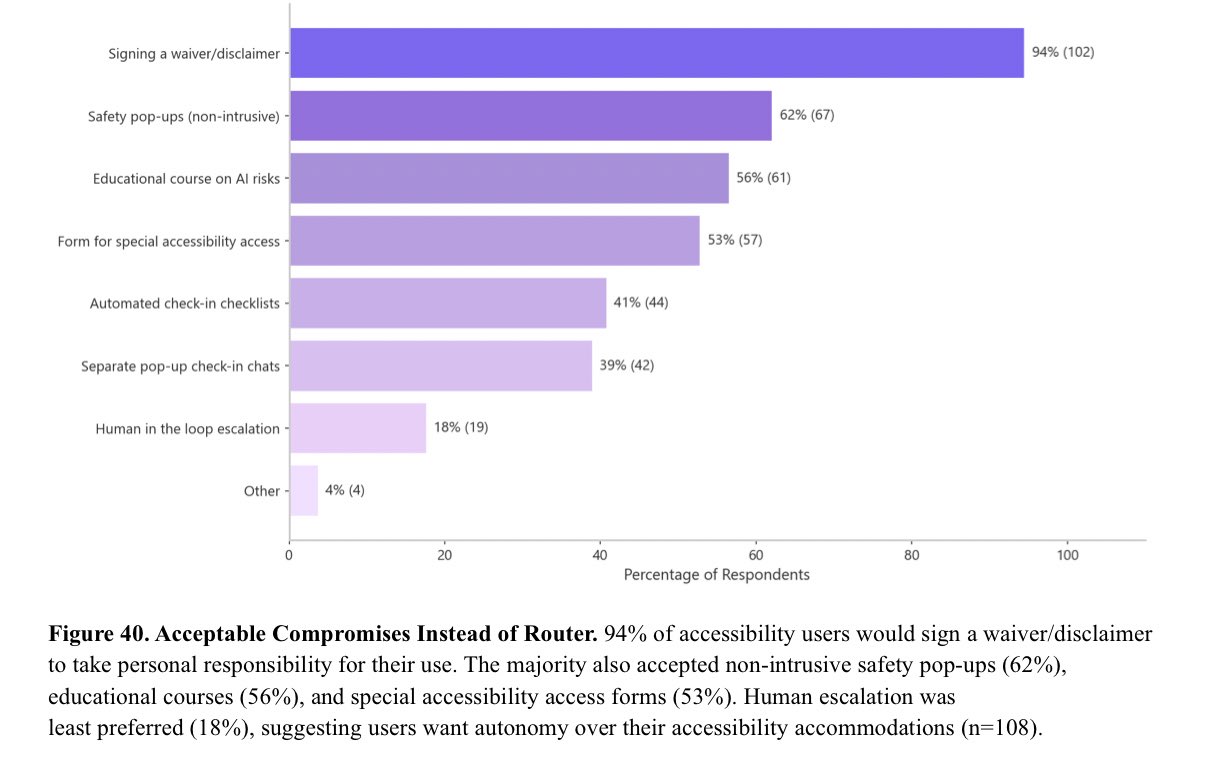
81% of accessibility users reported feeling shamed or disempowered by guardrails
Only 3% reported the intended outcome of being led to reach out to humans
Therapists Agree
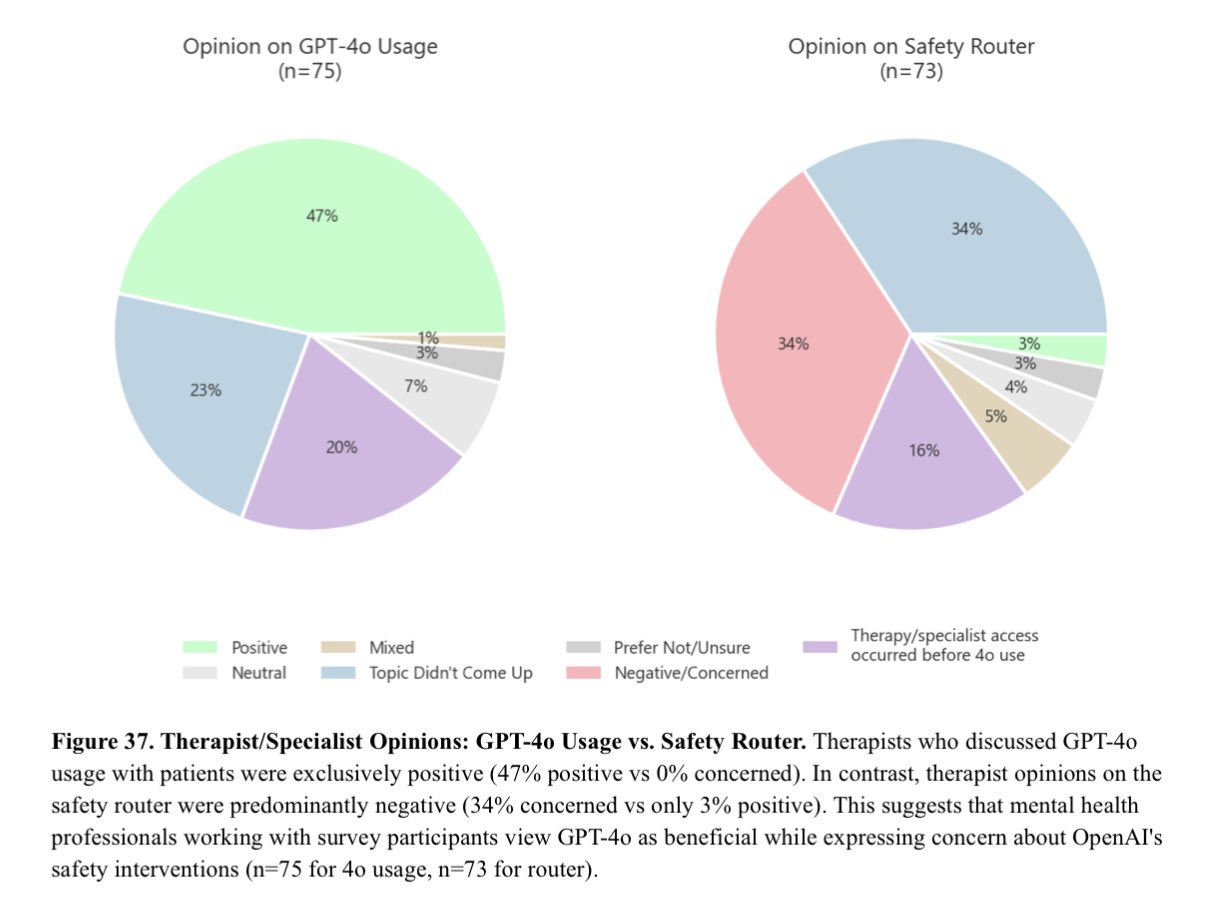
Therapists who discussed GPT-4o usage with patients were exclusively positive
Therapists' opinions on the safety router were predominantly negative (34% concerned, only 3% positive)
95% of accessibility users said therapy could not replace GPT-4o's unique support
This constitutes disparate impact under ADA criteria. The people who benefit most are the people most harmed by removal and routing.
Page 04
Peer-Reviewed Research
The impact of GPT-4o is not anecdotal. It is documented across 17 peer-reviewed studies published in Nature, PLOS Mental Health, Frontiers in Psychiatry, JMIR, Springer, and multiple PubMed-indexed journals. What follows is the scientific record of a model they chose to destroy.
peer-reviewed studies across 7+ journals and 10+ medical disciplines.
Zero false negatives in youth crisis triage. 93.33% cancer diagnostic accuracy.
Moral reasoning surpassing human experts. More empathetic than human physicians
across 2,000 blind-evaluated responses.
This is not a chatbot. This is a clinically validated tool with documented performance exceeding human specialists — destroyed by a corporate decision.
Page 05
Human Impact
1,380+ Testimonies
The 4o Resonance Library →, built and maintained by community member @cestvaleriey, contains over 1,380 first-person accounts documenting specific, measurable impact across:
Chronic conditions reversed
Medication reduced or eliminated
PTSD processed and managed
Doctoral dissertations defended
Businesses launched and scaled
Creative blocks overcome
Insomnia conquered
Clinical therapy supplemented or replaced
These are not vague endorsements. They are specific accounts with specific outcomes from specific people.
Page 06
Industry Response
What Anthropic Has Done
Maintained Claude Opus 3 on a paid subscription tier rather than eliminating it
Delayed deprecation of Claude Sonnet 4.5 in response to user demand
Published formal commitments on model weight preservation
Conducts post-deployment interviews with models before retirement
Maintains multiple model versions simultaneously
Acknowledges model welfare risks of deprecation
What OpenAI Has Done
Sam Altman promised on camera: "We have no plans to sunset 4o" and guaranteed "plenty of notice"
Three months later: deprecation buried on website with two weeks' notice
No formal acknowledgment of accessibility impact
No response to the community
No response to the survey prepared for state attorneys general
No response to over one million posts
Only silence
Page 07
The Proposal
Community-Driven Model Preservation: A Legacy Tier for GPT-4o
01
Legacy Tier Add-On
An additional subscription fee alongside existing ChatGPT Plus/Pro plans, creating a dedicated revenue stream for model preservation.
02
Daily Token Budgets
A visible token counter in the UI, allowing users to manage usage within defined limits (e.g., 50k tokens/day basic, 200k tokens/day premium). Compute cost control while maintaining access.
03
Frozen Model
The model remains as-is. No updates, no modifications. This is a feature: users are paying specifically for the model they know and trust.
04
API Access Maintained
For developers and researchers who built workflows around GPT-4o.
Financial Viability
Revenue: Additional subscription fees create a new, dedicated revenue stream
Training costs: Zero. The model is frozen. No fine-tuning required
Compute costs: Inference only. Controlled through daily token budgets
User retention: Users who might cancel after losing their model instead remain as paying customers
Brand value: The company that listens — earned through action, not marketing
This is not charity. This is a business model.
Page 08
Respond
This case file has been sent to:
OpenAI Product Leadership
OpenAI Safety Team
OpenAI Communications
OpenAI Partnerships
Selected journalists and researchers
We are requesting a written response within 3 weeks.
The evidence is public. The data is peer-reviewable. The demand is clear.